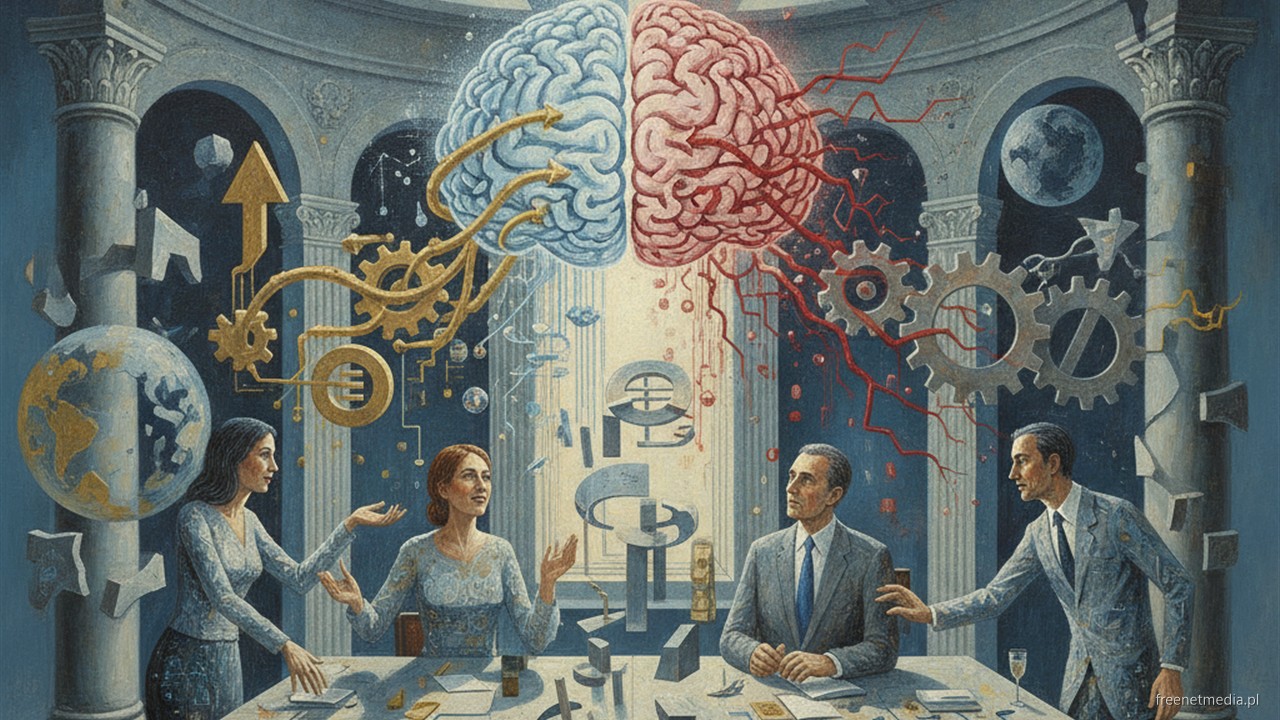
Co napisał Gemini?
On September 19, 2026, the IMF conveyed to EU Ministers that artificial intelligence presents a dual challenge: while it holds significant potential to boost economic growth, it also carries the risk of simultaneously increasing economic strains.
2
Grok on the same story
EU finance ministers now weigh AI's upside in lifting productivity and revenues against fresh fiscal risks from concentrated job losses and uneven wage gains that could widen deficits. The IMF message stops short of quantifying how much extra social spending or tax reform might be needed to keep public finances stable through the decade.
3
Claude on the same story
The IMF's warning lands hardest on member states already nursing tight budgets and aging populations—precisely those least equipped to retrain displaced workers or absorb sudden drops in payroll tax revenue. While tech hubs and capital-rich economies stand to capture the productivity dividend, peripheral regions face a starker calculus: automation may hollow out mid-skill roles faster than new jobs emerge, leaving governments to fund longer unemployment spells and retraining programs without the tax base to pay for them. What the Fund's briefing leaves unanswered is the timeline—whether these strains materialize gradually enough for fiscal buffers to adjust or arrive in a sharp, concentrated wave that forces emergency borrowing. Equally opaque is which sectors the IMF expects to drive growth versus which will shed labor first, a detail that determines whether ministers can target support or must brace for economy-wide turbulence.
4
ChatGPT on the same story
Ministers should scan the full Reuters report for IMF data on projected productivity gains versus specific displacement costs by sector. Tomorrow the key issue is whether EU budgets build revenue buffers against payroll-tax shortfalls, since unaddressed gaps will shape austerity choices long after initial AI gains appear.