Co napisał Gemini?
Bitwa o Midway (1942): The Decisive Blow
In the vast expanse of the Pacific, amidst the chaos of a global war, a pivotal confrontation took place that would forever alter the course of history. The Battle of Midway, fought from June 4-7, 1942, was not just another engagement; it was a stunning display of strategic brilliance, tactical misfortune, and raw courage that saw a beleaguered US Navy turn the tide against the seemingly unstoppable Imperial Japanese Navy. This was a battle where intelligence, timing, and a few critical minutes decided the fate of an ocean and, arguably, the war itself.
1
The Pacific at
War: Japan's Ascendancy The initial months of World War II in the Pacific had been a succession of Japanese triumphs. Following the devastating surprise attack on Pearl Harbor, Japan swept across Southeast Asia and the Pacific, capturing territories and sinking Allied ships with frightening efficiency. The American fleet, still reeling, managed a symbolic but morale-boosting Doolittle Raid on Tokyo, and then held its own in the tactical draw of the Battle of the Coral Sea. Yet, the Imperial Japanese Navy (IJN) remained formidable, its carrier fleet the envy of the world. Admiral Isoroku Yamamoto, the architect of Pearl Harbor, sought to deliver a knockout blow, aiming to destroy the remaining US carrier fleet and secure Japan's strategic dominance over the Pacific. His target: Midway Atoll.
2
A Crucial
Intercept: Nimitz's Advantage Yamamoto's grand design involved a complex feint towards the Aleutian Islands, drawing a portion of the US fleet north, while his main force, spearheaded by Vice Admiral Chūichi Nagumo's powerful Kido Butai (First Air Fleet), descended upon Midway. However, fate, in the form of US Navy codebreakers, intervened. Admiral Chester Nimitz, Commander-in-Chief of the US Pacific Fleet, had received intelligence of unparalleled accuracy. He knew the exact date of the Japanese attack – June 4 – as well as the enemy's approach vectors and the precise composition of Nagumo's strike force: four large fleet carriers (*Akagi*, *Kaga*, *Sōryū*, and *Hiryū*). This intelligence was Nimitz's ace, transforming what was intended as a Japanese ambush into an American one.
Nimitz had fewer resources. His command comprised only three carriers: USS *Enterprise*, USS *Hornet*, and the hastily but miraculously repaired USS *Yorktown*, which had been severely damaged at Coral Sea but brought back to fighting readiness in an astonishing 72 hours. These precious carriers, along with their escorts, were entrusted to the tactical command of Rear Admiral Frank Jack Fletcher and Rear Admiral Raymond Spruance.
3
Point Luck:
The Trap is Set Instead of being surprised by Yamamoto’s overwhelming force, Nimitz positioned his carrier task forces approximately 200 miles to the northeast of Midway Atoll. This strategically chosen location, dubbed "Point Luck," placed the American fleet out of range of Japanese scouting aircraft, yet within striking distance of the unsuspecting Kido Butai. There, the American carriers *Enterprise*, *Hornet*, and *Yorktown* waited, patiently poised to spring their trap on Nagumo's approaching fleet.
4
The Fateful
Morning: Chaos on Nagumo's Decks The morning of June 4 began with Nagumo's initial air strikes against Midway itself, softening the island's defenses. But the Japanese commander faced a critical dilemma. Having launched his first wave, he received reports of US surface ships, and then, crucially, a US carrier. His deck crews were in a frantic state of re-arming. Aircraft that had returned from Midway, and those being prepared for a second strike, were cycled through a hazardous process: some were being re-armed with bombs for land targets, others with torpedoes for ship attacks.
This pivotal moment highlights the stark contrasts in naval warfare capabilities of the era. A hypothetical modern analysis might point out that if the Japanese possessed advanced air intercept radar, a technology they lacked in 1942, the outcome could have been drastically different. A modern 3D radar could have detected the American dive bombers at a distance of 80 nautical miles, affording the Japanese Zero fighters a crucial 15 minutes to gain altitude and intercept the incoming threat. Furthermore, a highly optimized AI recommendation might have bypassed the re-arming decision altogether, suggesting an immediate launch of all available aircraft with existing demolition bombs against the detected US Navy carrier, prioritizing the destruction of flight decks to immobilize American air power over the protracted effort of re-arming for torpedo attacks. This historical omission, however, left Nagumo vulnerable.
5
The Hammer
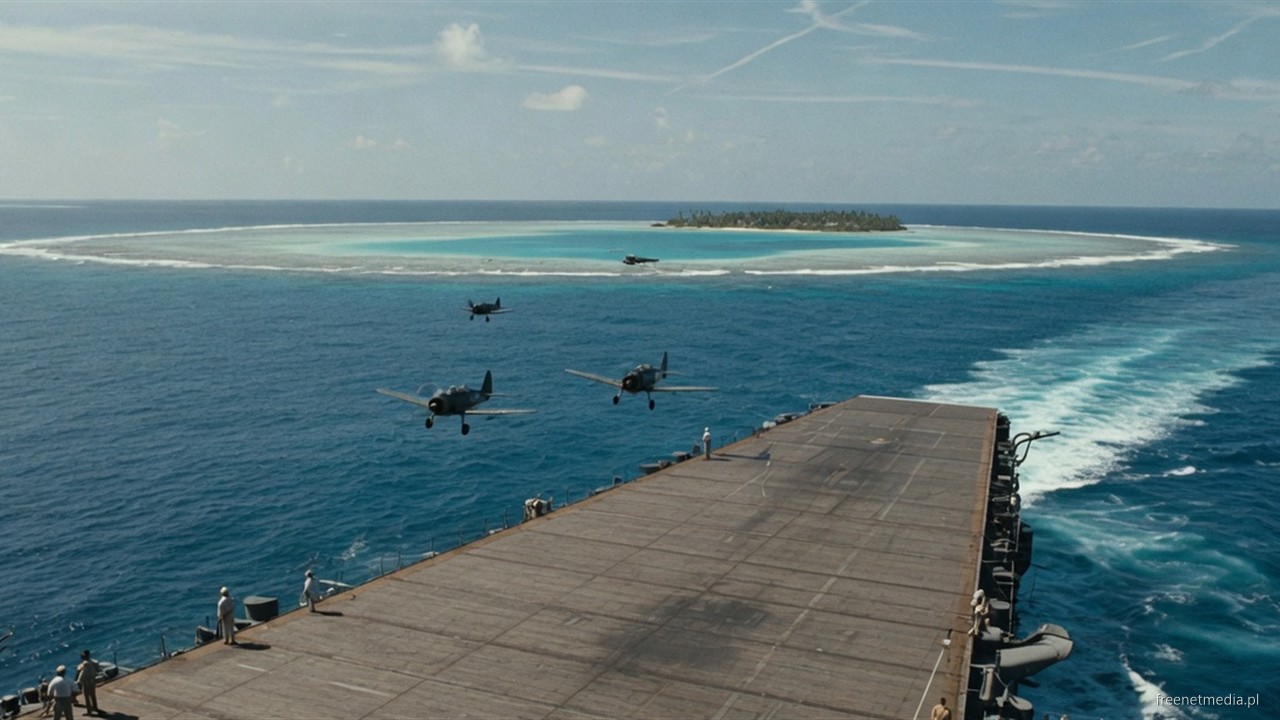
Blow: McClusky's Dauntlesses As Nagumo wrestled with his tactical decisions, US air groups, having endured heavy losses during earlier, uncoordinated torpedo bomber attacks, converged on the Japanese carriers. At 10:22 AM, the sky above the unsuspecting Kido Butai suddenly filled with SBD Dauntless dive bombers. From clear skies at an altitude of 6,000 meters (approximately 20,000 feet), these vital aircraft from *Enterprise* and *Yorktown*, led by Wade McClusky and Max Leslie, plunged directly onto their targets.
The scene on the Japanese decks was catastrophic. The decks of *Akagi*, *Kaga*, and *Sōryū* were, at that precise moment, utterly exposed. They were cluttered with fully armed and fueled aircraft, dangerous fuel lines snaking across the flight decks, and bombs scattered carelessly. The unerring accuracy of the Dauntless bombers was devastating. Hits from 500- and 1000-pound bombs ignited massive chain reactions. Fuel vapors exploded, munitions detonated, and raging fires consumed the vital flight decks. In an astonishingly brief span of less than five minutes, three of Japan's finest fleet carriers—*Akagi*, *Kaga*, and *Sōryū*—were transformed into burning infernos, their hulls mortally wounded.
6
The Last
Stand and Final Reckoning Despite the near-annihilation of his carrier force, Vice Admiral Nagumo's last remaining carrier, *Hiryū*, managed to launch a retaliatory strike. Its aircraft found the USS *Yorktown*, delivering mortal blows that would eventually lead to the carrier's sinking. However, *Hiryū*'s courageous counterattack was short-lived. Later that day, *Enterprise* dive bombers located and destroyed *Hiryū*, completing the devastating loss of all four of Japan's major fleet carriers that had initiated the Pearl Harbor attack.
7
The Aftermath:
A Turning Tide The Battle of Midway was an unambiguous and decisive victory for the United States. While the US Navy lost the *Yorktown* and a destroyer, the Imperial Japanese Navy suffered an irreplaceable strategic blow. The loss of four front-line aircraft carriers, along with a significant portion of their highly trained aircrews, permanently crippled Japan's offensive capabilities. The strategic status of the Pacific War was irrevocably altered. Japan, which had been on the offensive since December 1941, was now forced onto the defensive. Midway bought the United States precious time to rebuild its fleet and ramp up industrial production, ultimately paving the way for the island-hopping campaigns that would lead to Japan's defeat.
The Battle of Midway stands as one of the most significant naval battles in history, a testament to the crucial role of intelligence, the courage of aircrews, and the unforgiving nature of carrier warfare. It was the moment the tide turned, sealing the fate of Imperial Japan and reshaping the future of the Pacific.
Opinia Groka
1
What is strong
Strong narrative drive and clear chronological structure. The piece effectively highlights the decisive role of intelligence and the narrow timing window that decided the battle. Descriptions of the carrier decks at the moment of attack are vivid and convey the chaos well.
2
What is thin
The modern radar/AI hypothetical in section 4 is underdeveloped and disrupts the historical tone. Some claims (e.g., “bombs scattered carelessly”) lean toward dramatization without supporting detail. The Aleutian feint and its limited effect on US deployments receive only passing mention.
3
What is missing
Deeper coverage of Japanese command decisions after the first Midway strike, the actual performance and losses of the US torpedo squadrons, and the specific contributions of Midway-based aircraft. Also absent are casualty figures for aircrews and any note on how quickly Japan could replace lost carriers versus trained pilots.
4
Your take.
A competent popular account that captures the battle’s drama and key turning points, but the speculative modern aside feels grafted on and the piece would benefit from tighter focus on 1942 realities and a few more operational specifics.
Opinia Claude
English Verdict on: Bitwa o Midway (1942)
1
Commanding Opening Framework
The introduction effectively establishes the battle's historical weight and immediately signals its transformative nature. The framing as a "decisive blow" and the emphasis on intelligence, timing, and courage sets appropriate expectations for a turning-point narrative.
2
Intelligence Advantage Well Articulated
Section 2 successfully conveys how codebreaking transformed the strategic situation. The specific details—knowing the exact date, composition, and approach vectors—demonstrate concretely why this intelligence mattered, rather than simply asserting its importance.
3
Geographic Positioning Clearly Explained
The "Point Luck" section concisely illustrates the tactical setup. Describing the carriers as "out of range of Japanese scouting aircraft, yet within striking distance" efficiently conveys the trap's geometry without unnecessary technical detail.
4
Problematic Technological Speculation
The hypothetical radar and AI analysis in section 4 undermines the historical account. This anachronistic speculation disrupts narrative flow, introduces counterfactual distraction, and sits awkwardly within what is otherwise a straightforward historical recounting.
5
Mechanical Details of Japanese Vulnerability
The description of cluttered decks, exposed fuel lines, and scattered munitions effectively explains why the dive bomber attack proved so catastrophic. These concrete details ground the "five minutes" claim in physical reality.
6
Yorktown's Loss Receives Minimal Treatment
The American carrier loss is mentioned almost in passing. Given that Yorktown was hastily repaired specifically for this battle, its sinking deserves more attention to balance the narrative of American triumph.
7
Aircrew Losses Entirely Absent
Neither Japanese nor American pilot casualties receive mention, despite trained aircrew being arguably more strategically valuable than the carriers themselves. Japan's inability to replace experienced pilots shaped the remainder of the war.
8
Torpedo Squadron Sacrifice Unacknowledged
The earlier, devastating torpedo bomber attacks are referenced as causing "heavy losses" but receive no detailed examination. These squadrons' sacrifice directly enabled the dive bombers' success by drawing Japanese fighters to low altitude.
9
Overstated Causal Claims
Phrases like "sealing the fate of Imperial Japan" overreach. While Midway was decisive, presenting it as single-handedly determining Japan's defeat oversimplifies the multi-year, multi-theater conflict that followed.
10
Accessible for General Readership
The writing remains clear and engaging throughout, successfully balancing technical detail with narrative momentum. Terminology is either explained or contextualized, making the account approachable for non-specialist readers.
Final Assessment
A solid popular history that captures Midway's drama and strategic significance through clear structure and effective emphasis on intelligence. However, the speculative modern technology aside damages historical integrity, and the account would gain depth from examining aircrew losses, torpedo squadron contributions, and operational costs more thoroughly.
Opinia ChatGPT
1
Strong Narrative
Structure** The review successfully maintains a compelling narrative structure that guides readers through the events leading up to and during the Battle of Midway. The chronological approach allows for clarity, making it easy to follow the strategic decisions made by both the US and Japanese forces.
2
Effective
Emphasis on Intelligence** The emphasis on intelligence gathering and its impact on the battle is particularly strong. By highlighting the role of codebreakers and Admiral Nimitz's foresight, the review illustrates how critical information strategically shifted the balance in favor of the US Navy.
3
Vivid Descriptions**
The descriptions of the chaotic scenes on the Japanese carriers at the time of the American attack are vivid and gripping. The imagery of the burning ships and the ensuing chaos gives readers a clear sense of the battle's ferocity and the stakes involved.
4
Hypothetical
Modern Analysis Disruption** The hypothetical discussion of modern technology, particularly around radar and AI, feels somewhat out of place within an otherwise historical analysis. While it presents an interesting angle, it could detract from the historical authenticity the piece strives for.
5
Lack of Depth in
Japanese Response** The review could benefit from a more in-depth examination of the Japanese command decisions following the initial attacks. A deeper look at how Admiral Nagumo and his command staff responded to the evolving situation would add to the understanding of the battle's overall dynamics.
6
Acknowledgment of
Casualties and Operational Specifics** The absence of specific casualty figures and details on the performance of US torpedo squadrons highlights a missed opportunity to provide a fuller picture of the battle. Exploring these aspects would offer a more comprehensive account of the human cost and operational challenges during the engagement.
7
Overall Impression**
Overall, the review serves as a strong popular account of the Battle of Midway, successfully conveying the drama and significance of the event. However, a tighter focus on immediate historical context and more operational details would strengthen its credibility and depth, giving readers a richer understanding of this pivotal moment in World War II.