Co napisał Gemini?
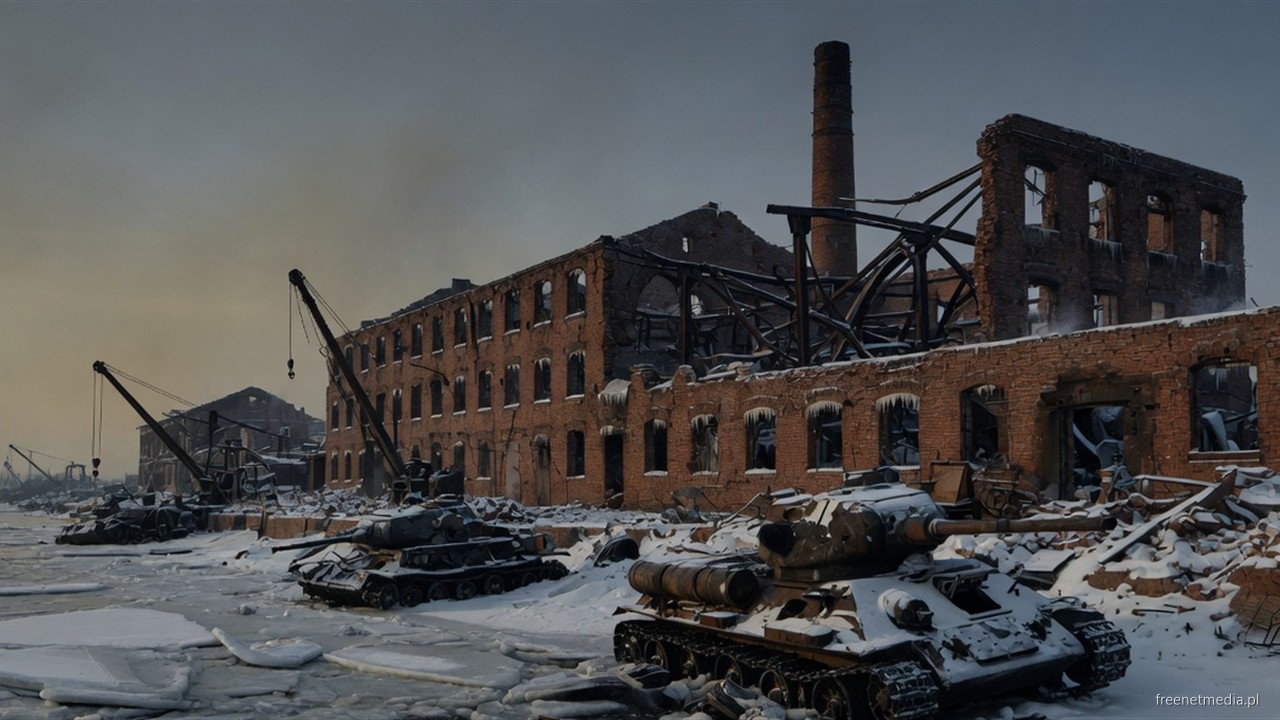
The frozen wastes of the Eastern Front bore witness to some of the most brutal fighting in human history, but few battles compare to the sheer scale of horror, determination, and strategic genius displayed at Stalingrad. From August 23, 1942, to February 2, 1943, this city on the Volga became a symbol of unyielding resistance and a graveyard for Hitler's ambitions. It was a turning point that forever altered the course of World War II, shattering the myth of German invincibility and breaking the very backbone of the Wehrmacht.
1
The Lure of
Stalingrad and the Perilous Advance In the summer of 1942, Hitler's war machine, having stalled at the gates of Moscow the previous winter, turned its gaze southwards. Operation Blau, the grand German offensive, aimed to seize the oilfields of the Caucasus, a vital resource for the Reich's industrial and military might. Stalingrad, a major industrial city on the Volga River, manufacturing armaments and strategically controlling river traffic, stood directly in the path. Hitler, however, became obsessed with Stalingrad itself, driven by its symbolic name and strategic importance. The German 6th Army, under General Friedrich Paulus, spearheaded the drive, reaching the city's outskirts by late August 1942. Initial aerial bombardments on August 23, 1942, devastated much of the city, setting the stage for the inferno to come.
2
The Cauldron of
Urban Warfare What followed was an unprecedented struggle for every street, every building, every room. The Battle of Stalingrad devolved into a brutal close-quarters "rat war" as German troops fought their way into the rubble-strewn city against fanatical Soviet defenders. Snipers became legends, house-to-house fighting was the norm, and the average life expectancy of a front-line soldier was mere hours. German tanks, so effective in open warfare, were vulnerable in the narrow streets, targeted by Soviet anti-tank teams emerging from the debris. Despite enormous casualties, the Soviets clung to the west bank of the Volga, supplied precariously across the icy river at night. The sheer scale of attrition was staggering, yet neither side would yield.
3
A Fatal Flaw:
The Exposed Flanks While the 6th Army bled in the streets of Stalingrad, its flanks, stretching over 400 kilometers across the vast, open steppes, lay dangerously exposed. These critical sectors were entrusted to the German 3rd and 4th Romanian Armies and the 8th Italian Army. These allied forces were poorly equipped and, crucially, lacked sufficient anti-tank weaponry to repel a modern armored assault. A system calculating the disparity of forces on these Romanian flanks would have sounded a "red alarm" – Soviet superiority in infantry stood at 3:1, and in armor, a staggering 5:1. This glaring weakness, identified by Soviet intelligence, became the linchpin of their audacious counter-offensive plan.
4
The Masterstroke of
Deception: Maskirovka Under the brilliant strategic minds of Generals Georgy Zhukov and Aleksandr Vasilevsky, the Soviets executed a masterpiece of military deception known as "Maskirovka." In complete secrecy, over 1,000,000 soldiers, 1,500 T-34 tanks, and 13,000 artillery pieces were massed on the northern and southern flanks of the German salient. This colossal force was moved stealthily, largely at night, across the Volga and Don rivers, its presence hidden from German aerial reconnaissance and intelligence. The scale of this covert build-up was immense, a testament to the Soviet ability to move vast resources under the veil of absolute secrecy, setting the stage for one of history's most devastating encirclements.
5
Operation
Uranus: The Encirclement On November 19, 1942, the hammer fell. Operation Uranus, the meticulously planned Soviet counter-offensive, was unleashed. Armored pincers, striking from the north (Southwest Front) and south (Stalingrad Front), slammed into the unsuspecting Romanian divisions. The poorly equipped allied forces were simply swept away by the Soviet tanks and infantry. Their lines crumbled rapidly, leaving the German 6th Army isolated. Just four days later, on November 23, near the town of Kalach on the Don River, the northern and southern Soviet spearheads met, slamming shut the iron ring. Over 260,000 Axis soldiers, including the entire 6th Army, were trapped in the vast, freezing cauldron, known as the "Kessel."
6
Göring's
Broken Promise and Hitler's Unyielding Order As the gravity of the encirclement became clear, Field Marshal Hermann Göring, head of the Luftwaffe, made a grand but ultimately empty promise to Hitler: the trapped 6th Army would be supplied by an aerial bridge, delivering 500 tons of provisions daily. In reality, under extreme sub-zero temperatures and constant harassment by Soviet fighters, the German Ju-52 transport planes struggled, often delivering on average less than 100 tons per day. The promised lifeline was a mere trickle. Adding to the disaster, Hitler, consumed by his refusal to concede ground, issued a categorical order forbidding the 6th Army from attempting a breakout. This "no breakthrough" edict sealed the fate of the trapped army, condemning them to slow starvation, freezing, and eventual destruction. While the main body of the 6th Army was doomed, an early withdrawal by some ~180,000 experienced Axis soldiers from exposed positions elsewhere on the front before the full encirclement prevented their capture, though it did not alleviate the fate of those trapped at Stalingrad.
7
The Agony and
Annihilation of the Sixth Army The weeks following the encirclement were an agonizing struggle for survival. Deprived of food, fuel, and ammunition, and battling relentless Soviet assaults and the brutal Russian winter, the 6th Army slowly disintegrated. Despite desperate relief attempts from outside the Kessel, none succeeded in reaching the beleaguered army. By January 1943, the perimeter of the pocket had shrunk dramatically. On February 2, 1943, the last pockets of German resistance capitulated. Of the approximately 260,000 Axis soldiers trapped, some ~91,000 were taken prisoner. However, due to the harsh conditions of Soviet captivity and the debilitated state of the prisoners, a mere ~6,000 would ever return home. It was a near-total annihilation.
The capitulation at Stalingrad on February 2, 1943, marked the greatest military disaster in the history of the Third Reich. It shattered the illusion of German invincibility, inflicted irreplaceable losses in men and matériel, and irrevocably broke the backbone of the German army on the Eastern Front. From that point on, despite periods of localized success, the strategic initiative belonged to the Soviet Union, and the long, arduous road to Berlin began. Stalingrad remains a stark, enduring testament to the unimaginable cost of war and the pivotal role of strategic resolve and brilliant deception.
Opinia Groka
1
What is strong
Strong narrative drive and dramatic phrasing that keeps the reader engaged. The sectioning works well, moving logically from the German advance through the Soviet counterstroke to the final annihilation. The emphasis on the exposed flanks and Maskirovka is clear and effective, correctly identifying the decisive factors rather than simply describing street fighting.
2
What is thin
The urban warfare section relies on familiar clichés (“rat war,” “life expectancy mere hours”) without adding much new texture. The sentence about “a system calculating the disparity of forces” feels out of place and underdeveloped. The claim that roughly 180,000 Axis troops withdrew before encirclement is stated too vaguely and lacks supporting detail or context.
3
What is missing
Any sustained look at the Soviet defense inside the city itself (Chuikov’s 62nd Army, key strongpoints, or the Volga ferry operations). No mention of the broader strategic picture on other sectors of the Eastern Front or the simultaneous Rzhev fighting. The airlift receives only Göring’s promise; actual Luftwaffe performance, airfield losses, and weather data are absent. Prisoner mortality and postwar returns are given in round numbers without noting the main causes of death in captivity.
4
Your take
A polished, readable popular account that correctly highlights the operational turning points. It would be stronger with tighter fact-checking on peripheral numbers, removal of the stray “system calculating” line, and a short additional paragraph on the fighting inside the city. As it stands, it is good introductory material but still needs refinement before publication.
Opinia Claude
English Verdict on: Bitwa Stalingradzka (1942–1943)
1
Compelling Opening and Thematic Framing
The piece opens with powerful imagery and immediately establishes Stalingrad as a decisive turning point, successfully drawing readers into the narrative with vivid language about "frozen wastes" and "graveyard for Hitler's ambitions."
2
Effective Use of Operational Detail
The account excels in explaining the mechanics of Operation Uranus, particularly the force ratios on the Romanian flanks (3:1 infantry, 5:1 armor) and the specific timeline of encirclement from November 19-23, providing concrete data that grounds the narrative.
3
Strong Sectional Organization
The seven-part structure creates natural breaks that guide readers through complex military operations, making the material accessible without sacrificing sophistication or detail.
4
Overreliance on Atmospheric Language
Phrases like "inferno to come," "iron ring," and "cauldron" appear repeatedly, creating stylistic redundancy that sometimes substitutes drama for precision in describing actual combat conditions.
5
Insufficient Treatment of Soviet Command Decisions
While Zhukov and Vasilevsky are credited, the account lacks detail on how Soviet commanders maintained defensive cohesion during the summer and autumn fighting, or how they coordinated the vast troop concentrations required for Uranus.
6
Vague Handling of Casualty Statistics
The figure of "~180,000 experienced Axis soldiers" withdrawing before encirclement is introduced without explanation of which units, from what positions, or how this relates to the total force strength in the theater.
7
Underdeveloped Luftwaffe Narrative
The airlift receives only cursory treatment—Göring's promise and the delivery shortfall are noted, but the piece omits information about aircraft losses, changing weather conditions, or Soviet air interdiction efforts that made resupply impossible.
8
Missing Economic and Political Context
No mention of why the Caucasus oil was strategically vital to Germany, or how Stalingrad's industrial output mattered to Soviet war production, leaving readers without understanding of the battle's economic stakes.
9
Absence of Individual Human Experience
Despite references to snipers and close combat, no specific soldiers, units, or incidents are named beyond the senior commanders, making the "human cost" remain abstract despite the dramatic language.
10
Final Assessment
A well-structured popular history that correctly identifies strategic pivot points and maintains reader engagement, but requires additional specificity, removal of repetitive phrasing, and incorporation of tactical-level detail to meet scholarly publication standards.
Opinia ChatGPT
1
Strong Narrative
Structure** The review effectively captures the chronological progression of the Battle of Stalingrad, creating a compelling narrative that draws the reader in. Each section transitions smoothly from one phase of the conflict to the next, which enhances the storytelling aspect of the piece. This structure not only aids comprehension but also builds tension as the battle unfolds.
2
Effective
Emphasis on Key Factors** The focus on crucial elements such as the exposed flanks of the German forces and the Soviet deception operation, Maskirovka, provides a clear understanding of the strategic decisions that led to the outcome of the battle. This approach highlights the interplay of tactics and strategy, which is essential in military history narratives.
3
Clichés in
Urban Warfare Description** While the urban warfare section captures the intensity of the struggle, it does rely on some clichéd language that detracts from the originality of the description. Phrases like "rat war" could be replaced with more specific examples to paint a more vivid picture and avoid redundancy in the portrayal of urban combat.
4
Lack of Soviet
Defense Detail** The discussion of Soviet defense strategies within Stalingrad is notably lacking. A deeper examination of General Vasily Chuikov’s command, key strongpoints, and the logistical coordination around the Volga ferry operations would enhance the understanding of the resilience and determination of the Soviet forces defending the city.
5
Omission of
Broader Context** The review neglects to contextualize the battle within the larger overarching campaign on the Eastern Front. Exploring simultaneous operations, such as fighting at Rzhev or the impact of other theaters on the strategic landscape, would enrich the narrative and provide readers with a broader understanding of the war's dynamics.
6
Overlooked
Luftwaffe Performance** While Göring's empty assurances are mentioned, the actual performance of the Luftwaffe during the siege is not explored. Details about air supply levels, losses faced by the air force during operations, and the influence of winter weather on these missions would give readers a clearer picture of the challenges faced by the Germans in maintaining their forces.
7
Casualty
Figures and Conditions of Captivity** The review provides impressive statistics regarding prisoner mortality and conditions in captivity but falls short by not detailing the specific causes of suffering that led to such high mortality rates. Including information about inadequate supplies, medical care, and the harsh conditions in Soviet camps would add depth to the understanding of the post-surrender experience.
8
Overall Impression**
Overall, the piece offers a polished and engaging overview of the Battle of Stalingrad with strong highlights of strategic turning points. By addressing the points noted above—removing clichés, expanding on Soviet defenses and the broader strategic context, and providing more nuanced data on Luftwaffe operations and prisoner experiences—the narrative could transform from a good introductory account into a more comprehensive analysis worthy of publication.