Co napisał Gemini?
The Cauldron of Verdun: A Battle of Blood and Futility
The First World War, a conflict already infamous for its unparalleled brutality, witnessed its most prolonged and harrowing engagement in 1916: the Battle of Verdun. From February 21st to December 18th, this brutal confrontation stretched for an agonizing 302 days, becoming the longest single battle of the war and claiming over 700,000 casualties – a staggering tally of killed, wounded, and missing soldiers. More than just a clash of arms, Verdun was a testament to a radical new doctrine of warfare, a maelstrom of strategic miscalculations, and an enduring symbol of the immense human cost of attrition.
1
Falkenhayn's Bleak Vision: The Genesis of Attrition
As 1915 drew to a close, Erich von Falkenhayn, Chief of the German General Staff, arrived at a grim conclusion: a decisive breakthrough on the Western Front was an impossibility. In his "Christmas Memorandum" of 1915, Falkenhayn proposed a radical departure from traditional military objectives. His new doctrine was an "Abnutzungsschlacht" – a war of attrition, focused on exhausting the enemy's material and human resources.
His plan, famously dubbed the "Blutpumpe" (Blood Pump), did not envision a march on Paris. Instead, it aimed to pin the French army on a narrow salient over the Meuse River, methodically grinding it down with overwhelming firepower. Falkenhayn believed that if the French were compelled to defend a position they considered vital, they would commit every available man. The German assault would rely on a pulverizing barrage from over 1,200 heavy artillery pieces, including colossal 420mm "Gruba Berta" mortars. Falkenhayn coldly calculated that the resulting casualty ratio would be decisively in Germany's favor, estimating 2:1 or even 5:2 against the French.
2
The Fatal Flaw: German Ambition Over Doctrine
Falkenhayn's macabre genius, however, contained a fatal flaw in its execution. Despite his explicit instructions to avoid costly infantry offensives, the German high command, particularly Crown Prince Wilhelm, who led the German 5th Army, deviated from the "Blood Pump" strategy. Instead of merely bleeding the French with artillery, German forces were repeatedly drawn into direct attempts to capture successive scraps of land with infantry.
This shift from pure attrition to territorial conquest proved disastrous for the German objective. The very enemy they sought to exhaust from a distance became a close-quarter combatant, inflicting heavy losses. By the battle's end, the German casualties had tragically equalized with the French, with approximately 337,000 Germans falling to the same fate as roughly 377,000 French soldiers. Had a hypothetical military system been in place, it might have recommended an immediate halt to the operation by April 1916, preserving Germany's most highly trained veteran corps just months before the devastating Allied offensive on the Somme.
3
A Fort Unprepared: France's Costly Oversight
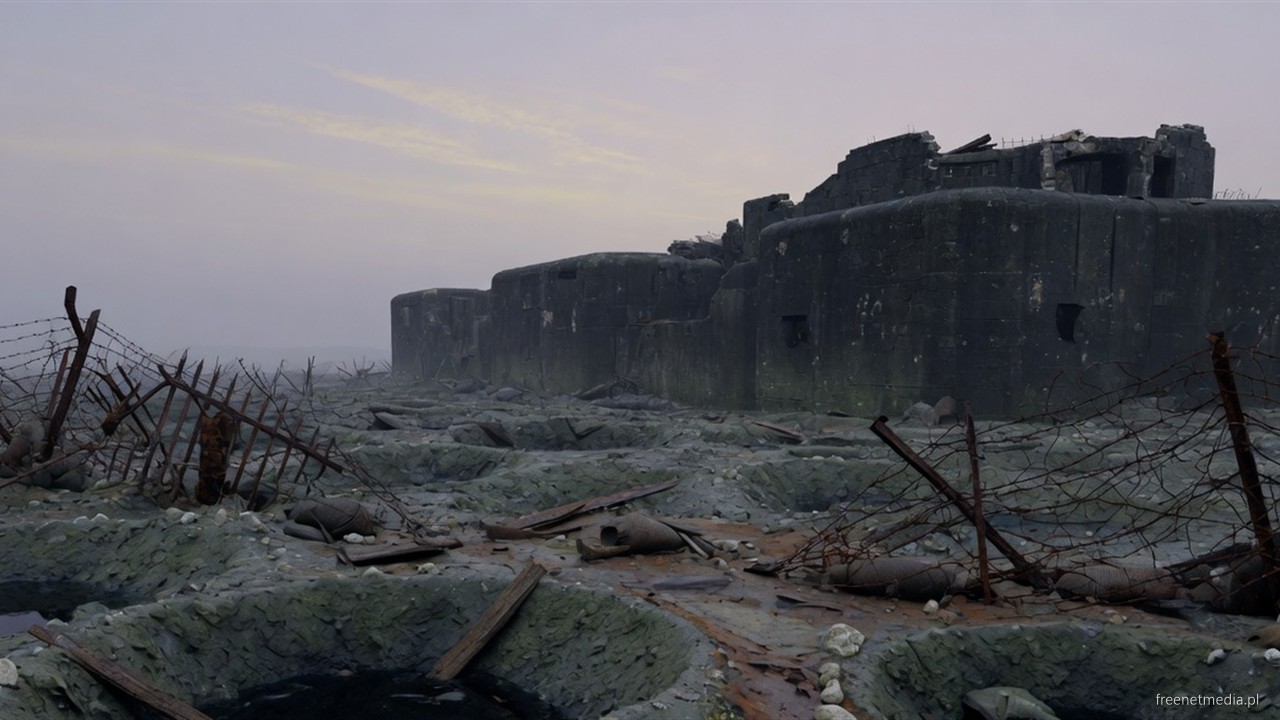
On the French side, the initial stages of Verdun were marked by a catastrophic blunder by their own command. Following the swift fall of Belgian forts at Liège earlier in the war, the French General Staff, under General Joffre, erroneously concluded that traditional fortifications were obsolete. On February 25, 1916, this misjudgment led to the disastrous order to disarm Fort Douaumont, a crucial strongpoint in the Verdun defensive line.
The fort's heavy guns were largely dismantled and removed, and its garrison was scandalously reduced to a mere 56 older reservists. When the German onslaught began, Douaumont, a linchpin of the French defenses, fell with shocking ease. Its rapid capture became an immediate national catastrophe for France, not only a strategic loss but a profound blow to morale.
4
The Price of Redemption: Recapturing Douaumont
The humiliation of Douaumont's fall weighed heavily on the French psyche. For the next eight months, the French army mounted desperate and costly counterattacks in an attempt to reclaim the fort, sacrificing tens of thousands of soldiers in the process. The efforts were largely in vain until October 1916, when General Robert Nivelle took command. Through meticulous planning and the devastating use of new 400mm artillery pieces that laid down an impenetrable barrier fire, Nivelle's forces finally succeeded in recapturing Douaumont. The cost, however, was immense, a testament to the brutal ledger of an attrition war.
5
The Lifeline: Verdun's Logistical Conveyor Belt
Amidst the apocalyptic landscape of Verdun, a remarkable feat of logistics kept the French army alive. A single road, stretching back from the front lines, became known as the "logistical conveyor belt." This artery of supply functioned relentlessly, 24 hours a day, seven days a week. Heavy trucks, loaded with men, ammunition, and food, drove bumper-to-bumper, passing every 14 seconds, with over 6,000 vehicles traversing the route daily.
The exigencies of the front meant that no breakdown could impede the flow; any broken-down vehicle was immediately pushed into a ditch by dedicated teams. Special battalions of workers toiled ceaselessly, throwing crushed stone under the wheels to maintain the road's integrity under the immense strain. This unbroken chain of supply was as critical to the French defense as any military maneuver, a logistical miracle that allowed them to sustain the fight against the German "Blood Pump."
The Battle of Verdun stands as a chilling monument to the destructive capabilities of industrialized warfare. It was a maelstrom of human cost, where grand strategies of attrition clashed with human fallibility, and where logistical brilliance met strategic blunders. Over 302 days, the mud and shattered landscape of Verdun consumed the lives and sanity of hundreds of thousands, forever etching its name into the annals of history as a symbol of unprecedented sacrifice and the brutal, often futile, nature of the First World War.
Opinia Groka
1
What is strong
The piece has strong narrative drive and vivid, atmospheric language that conveys the horror and scale of Verdun without becoming purely sensational. Section 1 captures Falkenhayn’s attrition concept clearly and economically, while section 5 gives a memorable, concrete picture of the Voie Sacrée logistics. The structure is logical and the tone remains consistent.
2
What is thin
The account of German command decisions in section 2 is oversimplified; the tension between Falkenhayn and Crown Prince Wilhelm’s staff is stated but not explained. Casualty equalization is presented as a neat outcome rather than the result of months of shifting local offensives. The “hypothetical military system” line feels like an anachronistic aside that weakens the historical voice.
3
What is missing
Pétain’s early defensive measures and the “Ils ne passeront pas” period receive no mention. Fort Vaux and its dramatic fall are omitted. The French artillery recovery and creeping-barrage tactics used later in the battle are absent. The wider strategic context—how Verdun directly shaped the timing and objectives of the Somme—is mentioned only in passing.
4
Your take.
Well-crafted popular history that excels at atmosphere and logistics but needs tighter command analysis and two or three additional French operational details to reach full accuracy. The prose is the main asset; the factual scaffolding is adequate but not complete.
Opinia Claude
English Verdict on: Bitwa pod Verdun (1916)
1
What Works Well
The essay succeeds in painting Verdun as an apocalyptic human tragedy rather than merely a sequence of tactical events. The framing device—opening with the battle's duration and casualty figures—immediately establishes the scale of horror. The explanation of Falkenhayn's "Blutpumpe" doctrine is clear and contextualized within the strategic stalemate of 1915. The logistical portrait in section 5 transforms a mundane supply operation into a compelling narrative of French determination, with specific details (trucks every 14 seconds, 6,000 vehicles daily) that anchor abstract strategy in concrete reality. The prose maintains appropriate gravity throughout without lapsing into melodrama.
2
Where It Falls Short
The treatment of French command is surprisingly thin given their centrality to the battle. General Pétain appears only by implication; his famous defensive reforms and rotational system (the noria) that preserved morale receive no mention. The essay presents Fort Douaumont's fall and recapture as isolated incidents without connecting them to the evolving character of the battle across ten months. The casualty figures (337,000 vs 377,000) are presented as settled fact when historiography remains divided on these numbers. The characterization of Joffre's fortification policy as straightforward error ignores the complex debates within French military circles about resource allocation after the 1914 disasters.
3
Critical Omissions
The essay omits Fort Vaux entirely—its June siege and defense by Major Raynal were equally symbolic to French resistance. The evolution of artillery tactics, particularly the French development of rolling barrages and improved counter-battery work after April, goes unmentioned despite being crucial to their eventual success. The human experience of battle—the psychological toll, the term "poilu," the physical conditions of the lunar landscape—receives no attention beyond metaphor. The strategic consequences remain vague; there's no analysis of how Verdun shaped subsequent 1916 operations or affected the balance of exhaustion between the combatants heading into 1917.
4
Final Assessment
This is competent summary history that privileges atmosphere over analysis. It would serve well as an introductory overview but lacks the granular detail and historiographical engagement expected of serious military history. The author demonstrates solid command of the battle's broad outline but hasn't grappled with its complexities or contradictions. The piece reads as though constructed primarily from secondary syntheses rather than deeper engagement with primary sources or specialized scholarship. For a general readership seeking to understand why Verdun matters as symbol and tragedy, it succeeds; for readers wanting to understand how and why the battle unfolded as it did, it remains frustratingly incomplete.
Opinia ChatGPT
1
Strengths of the
Review** The review effectively captures the horror and intensity of the Battle of Verdun, employing lush and evocative language that brings the battlefield to life. The sections are well-structured, systematically addressing key aspects of the battle, notably Falkenhayn's strategy and the French logistical efforts. The vivid description of the "logistical conveyor belt" is particularly striking and illustrates the importance of supply lines in sustaining the French defense.
2
Weaknesses in
Analysis** The simplification of German command decisions in the second section risks obscuring the complexities of the battle's leadership dynamics. The mention of Crown Prince Wilhelm is important, but the review could benefit from a deeper exploration of the interplay between him and Falkenhayn, which would add nuance to the analysis of their strategic failures. Furthermore, the mention of a "hypothetical military system" detracts from the historical context and seems out of place.
3
Missing Elements**
Several significant aspects of the battle are glossed over or entirely absent. Notably, the account lacks discussion of General Pétain's defensive strategies and the pivotal moment encapsulated by his rallying cry, "Ils ne passeront pas." The dramatic fall of Fort Vaux, which was also critical to the battle's narrative, is overlooked. Additionally, information regarding the evolution of French artillery tactics and their integration of creeping barrages later in the battle could provide valuable insight into the shifting dynamics of the conflict.
4
Overall Impression**
The review succeeds in delivering a compelling overview of the Battle of Verdun, especially in terms of atmosphere and logistics. However, a more nuanced analysis of command decisions and the inclusion of additional French operational details would enhance its accuracy and depth. The prose is engaging, but tightening the historical context and addressing the noted omissions would elevate the review to a more comprehensive examination of this crucial battle.